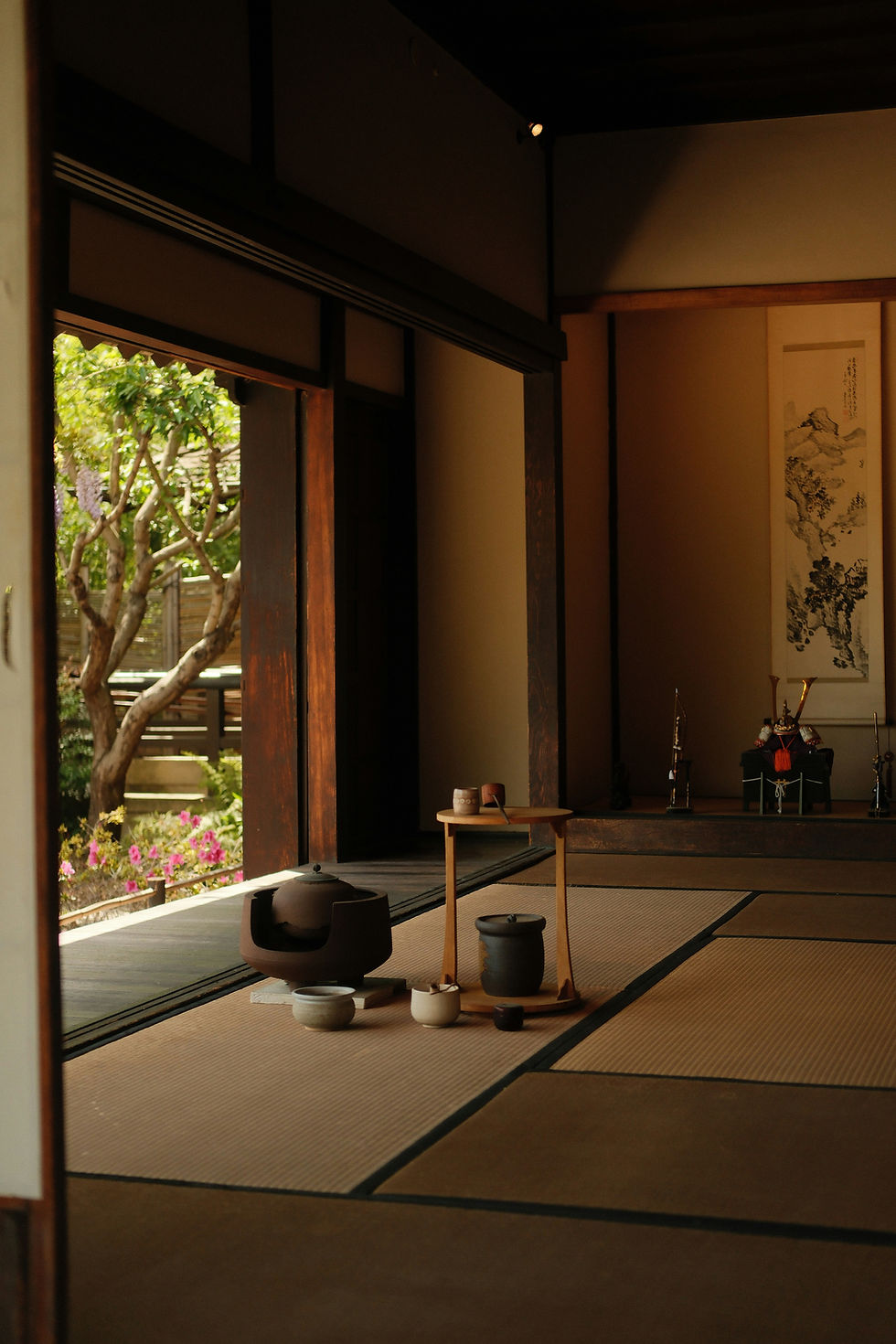
Japanese Tea and Zen: An 800-Year Journey to a Moment of Calm

Have you ever noticed how a cup of tea can naturally slow you down?
You hold the warm cup in your hands. You notice the aroma. You take a sip. And for a brief moment, your attention moves away from everything happening around you and returns to what is right in front of you.
In Japan, this connection between tea and a calm, attentive state of mind has a history stretching back more than 800 years. One of the most important figures in that story is the Zen monk Eisai.
Eisai, Zen, and the History of Japanese Tea

Eisai (1141–1215) was a Japanese Buddhist monk who traveled to China during the Song dynasty to study Buddhism. After returning to Japan, he became one of the most influential figures in establishing Rinzai Zen Buddhism in the country.
Tea had already existed in Japan before Eisai. It had been introduced from China centuries earlier, particularly through Buddhist monks and diplomatic missions. However, Eisai played an important role in revitalizing and spreading tea culture in Japan.
He brought back tea seeds and introduced aspects of the tea-drinking culture he had encountered in Song China, where tea was closely connected with life in Zen monasteries.
Eisai also wrote the Kissa Yōjōki (“Drinking Tea for Health”), one of Japan's earliest important texts dedicated to tea. In it, he described tea as something that could support physical and mental well-being.
For Eisai, tea was much more than simply a pleasant drink.
Why Did Zen Monks Drink Tea?

Life in a Zen monastery involved long periods of meditation. Remaining awake and attentive during extended meditation could naturally be challenging.
Tea offered practical support. Its caffeine helped monks remain alert and focused, making it particularly well suited to a life of meditation and disciplined practice.
But over time, the relationship between tea and Zen came to mean more than staying awake.
Zen places great importance on being fully present in everyday life. Meditation is one way of practicing this awareness, but ordinary activities can also become opportunities to pay attention to the present moment.
Preparing tea is a wonderful example.
Heating the water. Measuring the tea. Watching the leaves unfold. Noticing the aroma. Feeling the warmth of the cup. Taking the first sip.
These are very simple actions. Yet when we give them our full attention, something changes. For a few moments, we stop thinking about what happened yesterday or what we need to do tomorrow.
We are simply here, drinking tea.
“Kissako” — The Zen Meaning of “Have a Cup of Tea”

There is a well-known expression in Zen:
Kissako (喫茶去) — often translated simply as “Have a cup of tea.”
The expression is associated with the Chinese Zen master Zhaozhou and has been passed down through Zen tradition for centuries.
At first, it may sound almost too simple. Where is the profound teaching?
Perhaps that simplicity is precisely the point.
Zen repeatedly brings our attention back from complicated thoughts to the reality directly in front of us. Instead of searching endlessly for something extraordinary, we can become more aware of what is already here.
A cup of tea can offer exactly such a moment.
Why Japanese Tea and Zen Still Matter Today
Most of us today are not spending hours meditating in Zen monasteries. But perhaps we face a different kind of challenge.
Our minds are constantly stimulated.
Emails, meetings, messages, news, social media, and endless notifications compete for our attention. Even when we have a few minutes to ourselves, many of us instinctively reach for our phones.
Perhaps this is why the centuries-old relationship between tea and Zen still feels surprisingly relevant.
You do not need to become a Zen monk. You do not even need to know how to meditate.
Simply make yourself a cup of tea.
Put your phone aside for a few minutes.
Notice the aroma as the tea is prepared. Feel the warmth of the cup in your hands. Take a slow sip and notice the taste.
And for just a few minutes, do nothing else.
No scrolling. No emails. No planning what comes next.
Just tea.
More than 800 years after Eisai helped spread tea culture alongside Zen in Japan, a simple cup of tea can still remind us of something we easily forget:
Sometimes, finding a little calm does not require going anywhere at all.
Sometimes, it begins with simply being present with the cup of tea in front of you.

Kissako — Have a cup of tea.
Warm regards,
Masami
Nagomi no Zen 🍵