A Look Back at Our Sayama Tea Tasting Workshop in Copenhagen

Updated: Sep 25
17 September 2026
On 17 September, Nagomi no Zen held its first Japanese tea tasting workshop in Copenhagen: Discover & Taste Japanese Tea — Sayama Tea Tasting Workshop in Copenhagen.
The evening was dedicated to Sayama tea, one of Japan’s distinctive regional tea traditions, cultivated in Saitama Prefecture. Together with our special guests from Japan, Kunie and Yuki Kajishima, we explored the history and culture of Sayama tea, tasted several carefully selected teas, and learned about the dedication of the tea producers who continue to preserve and develop this remarkable tradition.
But the workshop was about more than tasting tea.
It was about slowing down.
About noticing.
And about discovering how much more there is to a cup of Japanese tea when we take the time to truly experience it.

Beginning with the Breath
Rather than beginning the Japanese tea tasting immediately, we started by creating a little space to arrive.
Masami from Nagomi no Zen led the group through a short tanden breathing exercise, a breathing practice long associated with Zen.
In the quiet room, participants were invited to bring their attention to the tanden — the area of the lower abdomen — and to breathe slowly and deeply.
It was a simple beginning, but an intentional one.
We stepped away from the busyness of everyday life and allowed the body and mind to settle before turning our attention towards the tea.
As the breath became steadier and the mind quieter, we could begin to notice the details that can so easily be overlooked: the colour of the tea, its fragrance, its texture, and the subtle changes in flavour as it unfolded on the palate.

For us, this is an important part of the Japanese tea experience.
Tea is not simply something to drink. It can also be an invitation to pause and be present.
Welcoming Our Special Guests from Japan
For this special Sayama tea tasting workshop, we were delighted to welcome Kunie Kajishima, representative of the NPO Agriculture Support Team, and her daughter, Yuki, who travelled from Japan to join us.

Kunie has spent many years sharing the culture and enjoyment of Japanese tea internationally through lectures, tea tastings and Tōcha, a traditional Japanese tea-tasting game. Her work has taken her to countries including Germany, France, Italy and Singapore.
During the workshop, Kunie and Yuki introduced us to the history and distinctive character of Sayama tea, while also sharing stories about the people and traditions behind the teas we were tasting.
And this is one of the things we love most about Japanese tea.
Behind every cup is a place.
A climate.
A way of cultivating and processing the leaves.
And generations of knowledge, patience and ingenuity.
When we understand these stories, a cup of tea can begin to feel very different.
A Journey Through Sayama Tea
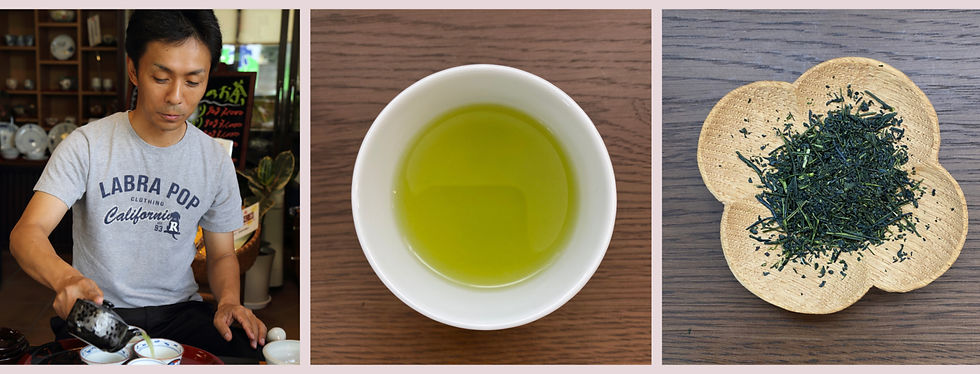
Our tasting journey began with cold-brewed tea before moving through Oku Haruka, Sayama Kaori, and finally hojicha.
Each tea offered something completely different — allowing us to explore the remarkable range of aromas, textures and flavours that Japanese tea can offer.
Cold-Brewed Japanese Tea
We began with a beautifully gentle cold-brewed Japanese green tea.
After the warming tanden breathing exercise, the cool tea offered a refreshing transition into the tasting.
Kunie had carefully prepared the tea at her hotel the day before, allowing the leaves to slowly release their flavours at a low temperature.
Cold brewing is a wonderful way to experience Japanese green tea. The slower extraction can highlight the tea's natural sweetness and create an exceptionally smooth and delicate mouthfeel.
It was a quiet and refreshing beginning to our tasting journey.
Oku Haruka — A Delicate Expression of Sayama Tea
Next came Oku Haruka, a rare single-origin sencha with a particularly soft and delicate character.
Produced by Shimizuen, a family-owned tea garden with more than 130 years of history, Oku Haruka has an elegant fragrance reminiscent of cherry blossom leaves and a beautifully refined character.
During the tasting, participants were encouraged to slow down and notice the tea carefully — its fragrance before tasting, its texture on the palate, and the flavours that gradually appeared and disappeared.
Oku Haruka is a wonderful example of how subtle Japanese tea can be.
Rather than overwhelming the senses, it invites you to pay closer attention.

Sayama Kaori — Umami, Fragrance and Balance
Our next tea was Sayama Kaori, a single-origin sencha crafted by Ohnishi-en, an award-winning tea farm.
The tea master responsible for producing this tea has won Japan's prestigious hand-rolled tea competition eight times, reflecting an extraordinary level of skill and dedication.
Sayama Kaori offers a harmonious balance of gentle bitterness, deep umami and elegant fragrance.
During the tasting, we invited participants to notice how these qualities developed together — how the initial impression changed as the tea remained on the palate and how the different elements came into balance.
This kind of attentive tasting is one of the pleasures of Japanese tea.
The more closely we look, the more there is to discover.
Hojicha — Warm, Roasted and Comforting
We ended our tea journey with hojicha, a Japanese roasted tea made from carefully selected tea leaves and stems.
The character was immediately different from the delicate sencha we had tasted before.
Its warm roasted aroma brought notes of toasted nuts, caramel and warm grain, while its smooth, naturally sweet character offered very little bitterness or astringency.
Hojicha is also naturally lower in caffeine than many green teas, making it a comforting choice for a relaxing afternoon or evening.
As the warm aroma of roasted tea filled the room, we enjoyed hojicha together with traditional Japanese sweets.
It was perhaps the most relaxed moment of the evening — a room full of conversation, smiles, tea and sweets.

Experiencing Japanese Tea in Different Ways
As I looked around the room while facilitating the workshop, I was struck by the different ways everyone experienced the teas.
Some participants closed their eyes and slowly savoured each cup, concentrating on the aroma and the flavours as they unfolded.
Others immediately began exchanging impressions with the person beside them, comparing what they could taste and discovering that the same tea could evoke different sensations for different people.
There was quiet concentration.
There was curiosity.
There was laughter.
And there were moments of connection over a shared cup of tea.
This is one of the things we find so beautiful about Japanese tea culture.
There is no single way to experience a tea.
One person may notice its fragrance first. Another may notice its texture or umami. Someone else may simply enjoy the warmth of the cup in their hands.
Tea gives us a reason to slow down — and a reason to come together.

The Pride of the Producers Behind Sayama Tea
Through Kunie's stories, we were once again deeply impressed by the care, knowledge and pride with which Sayama tea producers approach their craft.
One of the distinctive traditions of the region is jien-jisei — the practice of growing and processing one's own tea leaves.

This tradition has continued in the Sayama region for more than 200 years.
While preserving knowledge passed down through generations, tea producers continue to study, experiment and refine their methods, creating new expressions of tea while remaining deeply connected to the traditions of the past.
Sayama tea represents a relatively small part of Japan's overall tea production, accounting for less than 2% of the country's total.
Its significance, however, goes far beyond its quantity.
Within each tea garden lies a particular combination of landscape, climate, cultivation methods and craftsmanship. The character of Sayama tea is shaped by the people who have devoted generations to understanding how to bring the best out of the leaves.
The continued production of tea in the region for more than two centuries is a beautiful testament to this knowledge and dedication.
We were therefore especially happy to share these stories with our guests in Copenhagen — and to give them an opportunity to experience Sayama tea alongside Kunie and Yuki.
More Than a Cup of Tea
At Nagomi no Zen, we want to share more than the taste and aroma of Japanese tea.
We want to share the stories behind each cup.
Behind every tea is the natural environment in which it was grown, the people who cultivated and crafted it, and knowledge passed down through generations.
When we understand this background, even an everyday cup of tea can become a richer experience.
But tea can also offer something much simpler.
A pause.
A moment of stillness.
A chance to put down the phone, quiet the mind and give our full attention to what is in front of us.
Perhaps that is why tea has remained such an important part of Japanese culture for centuries.
It creates a small space in the day.
A space to connect with ourselves, with others and with the present moment.
Continuing the Journey
Our first Sayama tea tasting workshop in Copenhagen was a beautiful beginning, and we are deeply grateful to everyone who joined us.
A special thank you to Kunie and Yuki Kajishima for sharing their knowledge, stories and passion for Japanese tea with us, and to all our guests for bringing their curiosity and openness to the evening.
At Nagomi no Zen, we hope to continue creating intimate opportunities to discover Japanese tea, tea culture and the stories behind the people who produce it.
Because sometimes, something as simple as sharing a cup of tea can create a moment of calm, connection and nagomi — a little harmony and quiet peace in the middle of everyday life.
We look forward to gathering around tea with you again soon.
Until then, take a moment to slow down, prepare a cup of tea, and savour it.
Discover Japanese Tea with Nagomi no Zen
Interested in discovering authentic Japanese tea and the traditions behind it?
Nagomi no Zen brings carefully selected Japanese green tea, sencha, hojicha and matcha from Japan to Denmark, with a focus on quality, craftsmanship and the stories behind each tea.
We also create Japanese tea tastings and workshops, where guests can explore different Japanese teas, learn about their origins and discover how to appreciate each cup with greater attention.
Stay connected with Nagomi no Zen for upcoming tea tastings, workshops and Japanese tea experiences in Denmark.

---
Stay connected on Instagram or join our newsletter to receive occasional updates for future tea events, stories, and news from Nagomi no Zen.
Instagram: https://www.instagram.com/nagomi_no_zen/
Newsletter: https://www.nagomi-no-zen.dk/subscription
